Buy luftballons.eu ?
We are moving the project
luftballons.eu .
Are you interested in purchasing the domain
luftballons.eu ?
domain@kv-gmbh.de · 0541-91531010
Buy luftballons.eu ?
How are the nerve cells structured in invertebrates?
In invertebrates, nerve cells are organized into a network called a nerve net. This nerve net consists of interconnected neurons that are spread throughout the body. These neurons are typically simpler in structure compared to the more specialized nerve cells found in vertebrates. The nerve net allows for rapid communication and coordination of responses to stimuli in invertebrates. **
What is the difference between vertebrates and invertebrates?
The main difference between vertebrates and invertebrates is the presence of a backbone. Vertebrates have a backbone made of vertebrae that protects the spinal cord, while invertebrates do not have a backbone. Vertebrates include animals such as mammals, birds, reptiles, amphibians, and fish, while invertebrates include animals such as insects, spiders, worms, and mollusks. Additionally, vertebrates tend to have more complex body systems and are generally larger in size compared to invertebrates. **

Similar search terms for Invertebrates
Top-Angebote
Products related to Invertebrates:
-
Inspire Select 2 PCS Inflatable Radio Toy Set 90s Retro Boombox For Party Decorations, Hip Hop Themed Birthday Photo Prop mobile PhoneDescription Bring the fun of the 90s into your celebration with this inflatable radio toy set, designed as oversized retro boombox props perfect for party dcor, photo booths, and themed events. This 2piece set features bold graphics and vibrant...41,98 $*Shipping: 0,00 $Secure redirect to the provider
-
Uplift Picks Inflatable Christmas Ring Toss Headband Party Game Inflatable Christmas Ring Toss Headband Party GameTurn any holiday gathering into a moment of laughter and friendly competition. This inflatable ring toss game adds instant fun to Christmas parties with a playful tree shaped headband that players wear while others aim and toss rings. Designed for...40,48 $*Shipping: 0,00 $Secure redirect to the provider
-
Shop Station Halloween Inflatable Coffin Buffet Cooler For Drinks And Party Snacks Halloween Inflatable Coffin Buffet Cooler For Drinks And Party SnacksBring spooky style and practical convenience to your Halloween celebration with this Halloween Inflatable Coffin Buffet Cooler. Designed in a coffin shape, this festive party cooler provides space for keeping beverages cold while displaying drinks...739,97 $*Shipping: 0,00 $Secure redirect to the provider
-
The Handy Homestead Inflatable Sombrero Ice Bucket Drink Cooler Floating Party Beverage Chiller Inflatable Sombrero Ice Bucket Drink Cooler Floating Party Beverage ChillerTurn any gathering into a lively, refreshing experience with this playful inflatable sombrero ice bucket drink cooler designed for effortless outdoor entertaining. This Inflatable Ice Bucket brings both function and fun together, keeping your...41,97 $*Shipping: 0,00 $Secure redirect to the provider




-
Into which seven groups can invertebrates be divided?
Invertebrates can be divided into seven groups: Porifera (sponges), Cnidaria (jellyfish, corals), Platyhelminthes (flatworms), Nematoda (roundworms), Annelida (segmented worms), Mollusca (snails, clams, octopuses), and Arthropoda (insects, spiders, crustaceans). Each group has its own unique characteristics and includes a wide variety of species with diverse adaptations for survival. **
-
What are the characteristics of vertebrates, invertebrates, and insects?
Vertebrates are animals with a backbone or spinal column, including mammals, birds, reptiles, amphibians, and fish. They typically have a well-developed internal skeleton and a complex nervous system. Invertebrates, on the other hand, are animals without a backbone, such as insects, arachnids, mollusks, and crustaceans. They often have exoskeletons for support and protection. Insects are a specific type of invertebrate characterized by having six legs, three body segments (head, thorax, and abdomen), and often wings. They are the most diverse group of animals on Earth, with over a million described species. **
-
Why are there mainly electrical synapses in fish and invertebrates?
Electrical synapses are more common in fish and invertebrates because they allow for faster and more direct communication between neurons. This is important in these organisms for rapid responses to environmental stimuli and for coordinating movements. Additionally, electrical synapses are more energy-efficient compared to chemical synapses, which is advantageous for organisms with simpler nervous systems. Overall, the prevalence of electrical synapses in fish and invertebrates reflects their need for efficient and rapid neural communication in their environments. **
-
What is the difference between the axons of vertebrates and invertebrates?
The main difference between the axons of vertebrates and invertebrates lies in their myelination. In vertebrates, axons are often myelinated, which means they are surrounded by a fatty substance that speeds up the transmission of electrical signals. In contrast, invertebrate axons are typically unmyelinated, which can result in slower signal transmission. Additionally, vertebrate axons tend to be larger in diameter compared to invertebrate axons, allowing for faster conduction of nerve impulses. **


How does the conduction of excitation work in vertebrates and invertebrates?
In vertebrates, excitation is conducted through the nervous system, which consists of neurons that transmit electrical signals. When a stimulus is detected, such as touch or sound, sensory neurons transmit the signal to the central nervous system, where it is processed and a response is generated. This response is then transmitted through motor neurons to the appropriate muscles or glands. In invertebrates, excitation is also conducted through the nervous system, but their nervous system is less centralized than in vertebrates. Invertebrates have a network of neurons that transmit signals throughout the body, allowing for rapid responses to stimuli. Some invertebrates, such as insects, also have specialized sensory organs that detect specific stimuli and transmit signals to the nervous system for processing and response. **
What ideas are there for a presentation on invertebrates in the subject of Biology?
A presentation on invertebrates in Biology could cover various topics such as the classification of invertebrates, their diversity and adaptations, their ecological roles in different ecosystems, and their importance in various fields like medicine and agriculture. The presentation could also focus on specific groups of invertebrates such as insects, mollusks, or arachnids, highlighting their unique characteristics and life cycles. Additionally, discussing current research on invertebrates, their conservation status, and the threats they face due to human activities could also be included in the presentation. **
Top-Angebote
Products related to Invertebrates:
-
NO 9.6FT Halloween Inflatable Decorations Skeleton Tombstone Banner Outdoor DecorationsMake a bold statement this Halloween with the 9.6FT inflatable skeleton holding a tombstone banner—an eye-catching centerpiece designed to thrill trick-or-treaters and party guests alike.84,99 $*Shipping: 0,00 $Secure redirect to the provider
-
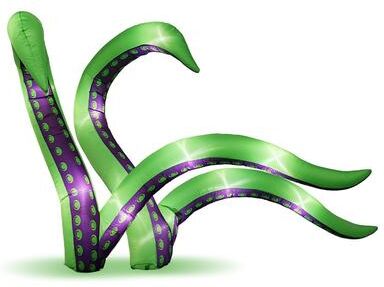
NO 2 Pack 6.9FT Halloween Inflatable Octopus Tentacles Outdoor DecorationsMake your Halloween display come alive with this 2-pack of 6.9FT inflatable octopus tentacles—an eerie and creative decoration perfect for windows, rooftops, or garden areas.86,49 $*Shipping: 0,00 $Secure redirect to the provider
-
Inspire Select 2 PCS Inflatable Radio Toy Set 90s Retro Boombox For Party Decorations, Hip Hop Themed Birthday Photo Prop mobile PhoneDescription Bring the fun of the 90s into your celebration with this inflatable radio toy set, designed as oversized retro boombox props perfect for party dcor, photo booths, and themed events. This 2piece set features bold graphics and vibrant...41,98 $*Shipping: 0,00 $Secure redirect to the provider
-
Uplift Picks Inflatable Christmas Ring Toss Headband Party Game Inflatable Christmas Ring Toss Headband Party GameTurn any holiday gathering into a moment of laughter and friendly competition. This inflatable ring toss game adds instant fun to Christmas parties with a playful tree shaped headband that players wear while others aim and toss rings. Designed for...40,48 $*Shipping: 0,00 $Secure redirect to the provider
-
How are the nerve cells structured in invertebrates?
In invertebrates, nerve cells are organized into a network called a nerve net. This nerve net consists of interconnected neurons that are spread throughout the body. These neurons are typically simpler in structure compared to the more specialized nerve cells found in vertebrates. The nerve net allows for rapid communication and coordination of responses to stimuli in invertebrates. **
-
What is the difference between vertebrates and invertebrates?
The main difference between vertebrates and invertebrates is the presence of a backbone. Vertebrates have a backbone made of vertebrae that protects the spinal cord, while invertebrates do not have a backbone. Vertebrates include animals such as mammals, birds, reptiles, amphibians, and fish, while invertebrates include animals such as insects, spiders, worms, and mollusks. Additionally, vertebrates tend to have more complex body systems and are generally larger in size compared to invertebrates. **
-
Into which seven groups can invertebrates be divided?
Invertebrates can be divided into seven groups: Porifera (sponges), Cnidaria (jellyfish, corals), Platyhelminthes (flatworms), Nematoda (roundworms), Annelida (segmented worms), Mollusca (snails, clams, octopuses), and Arthropoda (insects, spiders, crustaceans). Each group has its own unique characteristics and includes a wide variety of species with diverse adaptations for survival. **
-
What are the characteristics of vertebrates, invertebrates, and insects?
Vertebrates are animals with a backbone or spinal column, including mammals, birds, reptiles, amphibians, and fish. They typically have a well-developed internal skeleton and a complex nervous system. Invertebrates, on the other hand, are animals without a backbone, such as insects, arachnids, mollusks, and crustaceans. They often have exoskeletons for support and protection. Insects are a specific type of invertebrate characterized by having six legs, three body segments (head, thorax, and abdomen), and often wings. They are the most diverse group of animals on Earth, with over a million described species. **
Similar search terms for Invertebrates
-
Shop Station Halloween Inflatable Coffin Buffet Cooler For Drinks And Party Snacks Halloween Inflatable Coffin Buffet Cooler For Drinks And Party SnacksBring spooky style and practical convenience to your Halloween celebration with this Halloween Inflatable Coffin Buffet Cooler. Designed in a coffin shape, this festive party cooler provides space for keeping beverages cold while displaying drinks...739,97 $*Shipping: 0,00 $Secure redirect to the provider
-
The Handy Homestead Inflatable Sombrero Ice Bucket Drink Cooler Floating Party Beverage Chiller Inflatable Sombrero Ice Bucket Drink Cooler Floating Party Beverage ChillerTurn any gathering into a lively, refreshing experience with this playful inflatable sombrero ice bucket drink cooler designed for effortless outdoor entertaining. This Inflatable Ice Bucket brings both function and fun together, keeping your...41,97 $*Shipping: 0,00 $Secure redirect to the provider
-
The Handy Homestead Giant Inflatable Dice Party Game Toy For Indoor Outdoor Fun Giant Inflatable Dice Party Game Toy For Indoor Outdoor FunBring instant laughter, movement, and friendly competition to any gathering with 1pc inflatable dice made for big, playful moments. This lightweight blowup cube is a fun giant dice toy for kids, families, classrooms, parties, and outdoor activities....34,97 $*Shipping: 0,00 $Secure redirect to the provider
-
HeroKiddo 42 ft. T-Rex Adventure Inflatable Obstacle Course with Water Slide & Splash Pool, Dinosaur Party InflatableUnleash a Jurassic-sized adventure! The HeroKiddo 42 ft. T-Rex Adventure Inflatable Obstacle Course with Water Slide combines high-energy obstacle challenges with refreshing water-slide fun for an action-packed experience kids and families will love.2603,19 $*Shipping: 0,00 $Secure redirect to the provider
-
Why are there mainly electrical synapses in fish and invertebrates?
Electrical synapses are more common in fish and invertebrates because they allow for faster and more direct communication between neurons. This is important in these organisms for rapid responses to environmental stimuli and for coordinating movements. Additionally, electrical synapses are more energy-efficient compared to chemical synapses, which is advantageous for organisms with simpler nervous systems. Overall, the prevalence of electrical synapses in fish and invertebrates reflects their need for efficient and rapid neural communication in their environments. **
-
What is the difference between the axons of vertebrates and invertebrates?
The main difference between the axons of vertebrates and invertebrates lies in their myelination. In vertebrates, axons are often myelinated, which means they are surrounded by a fatty substance that speeds up the transmission of electrical signals. In contrast, invertebrate axons are typically unmyelinated, which can result in slower signal transmission. Additionally, vertebrate axons tend to be larger in diameter compared to invertebrate axons, allowing for faster conduction of nerve impulses. **
-
How does the conduction of excitation work in vertebrates and invertebrates?
In vertebrates, excitation is conducted through the nervous system, which consists of neurons that transmit electrical signals. When a stimulus is detected, such as touch or sound, sensory neurons transmit the signal to the central nervous system, where it is processed and a response is generated. This response is then transmitted through motor neurons to the appropriate muscles or glands. In invertebrates, excitation is also conducted through the nervous system, but their nervous system is less centralized than in vertebrates. Invertebrates have a network of neurons that transmit signals throughout the body, allowing for rapid responses to stimuli. Some invertebrates, such as insects, also have specialized sensory organs that detect specific stimuli and transmit signals to the nervous system for processing and response. **
-
What ideas are there for a presentation on invertebrates in the subject of Biology?
A presentation on invertebrates in Biology could cover various topics such as the classification of invertebrates, their diversity and adaptations, their ecological roles in different ecosystems, and their importance in various fields like medicine and agriculture. The presentation could also focus on specific groups of invertebrates such as insects, mollusks, or arachnids, highlighting their unique characteristics and life cycles. Additionally, discussing current research on invertebrates, their conservation status, and the threats they face due to human activities could also be included in the presentation. **
* All prices are inclusive of VAT and, if applicable, plus shipping costs. The offer information is based on the details provided by the respective shop and is updated through automated processes. Real-time updates do not occur, so deviations can occur in individual cases. ** Note: Parts of this content were created by AI.